





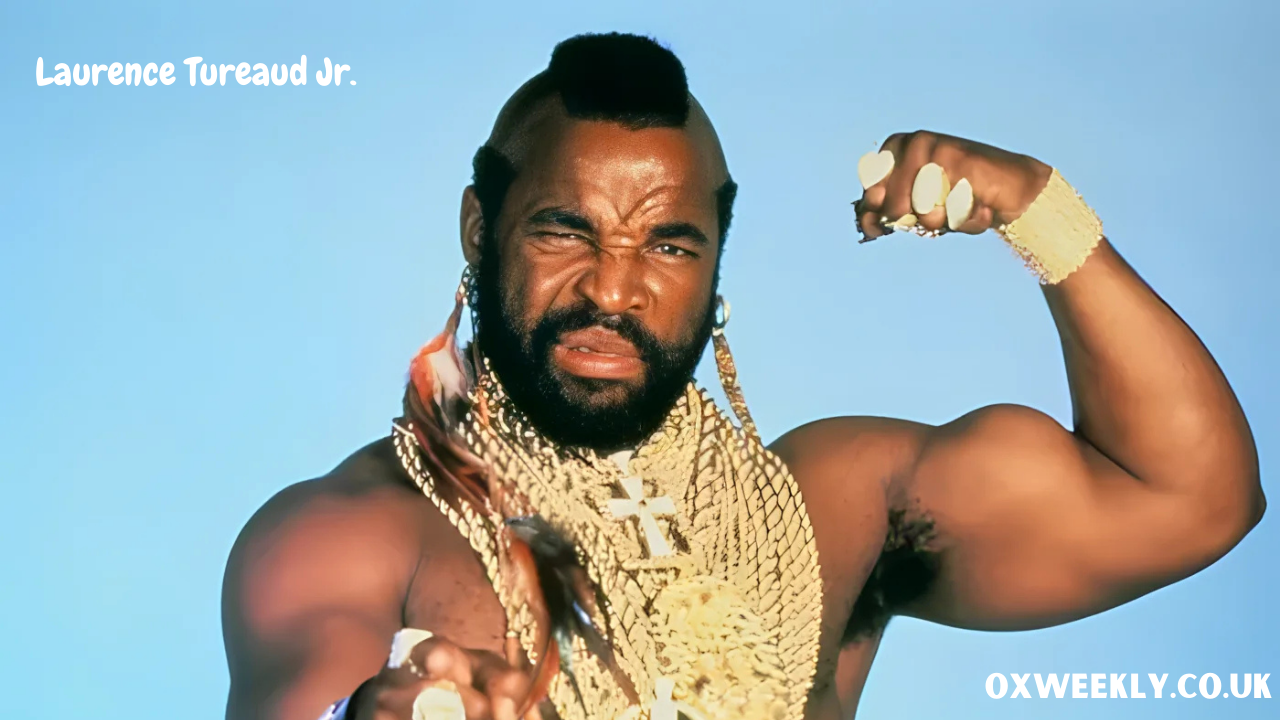
Laurence Tureaud Jr. is the birth name of the performer widely known as Mr. T, a figure whose distinctive look and catchphrases made him one of the most recognizable entertainers of the 1980s. He built a career spanning professional wrestling, television, and film while cultivating a public persona rooted in discipline and self-respect. Readers exploring Laurence Tureaud Jr. will also find context in Melissa Esplana: Career Highlights and Public Profile
From Chicago Roots to National Fame
Mr. T was born on May 21, 1952, in Chicago, Illinois, the youngest of twelve children in a family that lived in the Robert Taylor Homes housing project. He attended Dunbar Vocational High School, where he excelled in football and wrestling. After high school, he briefly attended Prairie View A&M University in Texas before leaving to support his family. He then worked as a gym instructor and later served as a bouncer at several Chicago nightclubs. His imposing physical presence and distinctive mohawk hairstyle, inspired by Mandinka warriors he saw in a National Geographic magazine, began drawing attention during this period. Background on Laurence Tureaud Jr. wikipedia.org/wiki/Tureaud” rel=”noopener noreferrer” target=”_blank”>Tureaud
His entry into professional wrestling came in the mid-1980s when he competed in the World Wrestling Federation. Hulk Hogan recruited him for a tag team match at WrestleMania I on March 31, 1985, at Madison Square Garden in New York City. The event drew significant mainstream coverage and helped launch Mr. T into broader public consciousness. He later appeared in WrestleMania II in 1986 and participated in boxing storylines within the WWF.
How Laurence Tureaud Jr. Became a Television and Film Star
His breakout acting role came in 1982 when cast as Sergeant Bosco “B.A.” Baracus in the television series The A-Team, which ran on NBC for five seasons until 1987. The character, a mechanically gifted but fear-flying Vietnam veteran, became a defining role of his career. He earned a Golden Globe nomination in 1983 for Best Supporting Actor in a Series, Miniseries, or Television Film for this performance.
That same year, he appeared in Rocky III as Clubber Lang, the aggressive boxer who challenges Sylvester Stallone’s Rocky Balboa. The film was a major box office success and further cemented his place in pop culture. He also starred in the 1984 film DC Cab, a comedy about Washington, D.C. taxi drivers, and hosted the television series World’s Strongest Man in various iterations throughout the late 1980s and 1990s.
Beyond scripted roles, Mr. T became known for motivational speaking aimed at youth audiences. He frequently appeared on talk shows and at schools, delivering messages about discipline, education, and avoiding drugs. His catchphrase “I pity the fool,” first used in Rocky III, entered the broader cultural lexicon and remains widely referenced decades later.
What Is Verified and What Remains Less Documented
His Golden Globe nomination in 1983 is a matter of public record.
Some accounts vary on which clubs he worked at and in what order.
Why Mr. T’s Legacy Continues to Resonate
Laurence Tureaud Jr. represents a rare case of a performer whose personal brand became inseparable from his professional identity. His emphasis on discipline and respect, delivered through a larger-than-life persona, appealed to audiences across age groups during a period when action-oriented entertainment dominated American television. His influence extends beyond his filmography into fitness culture, motivational speaking, and the broader archetype of the tough-but-principled character in action media. New generations continue to encounter his work through streaming platforms and cultural references, ensuring that his contributions to entertainment remain part of the ongoing conversation.