


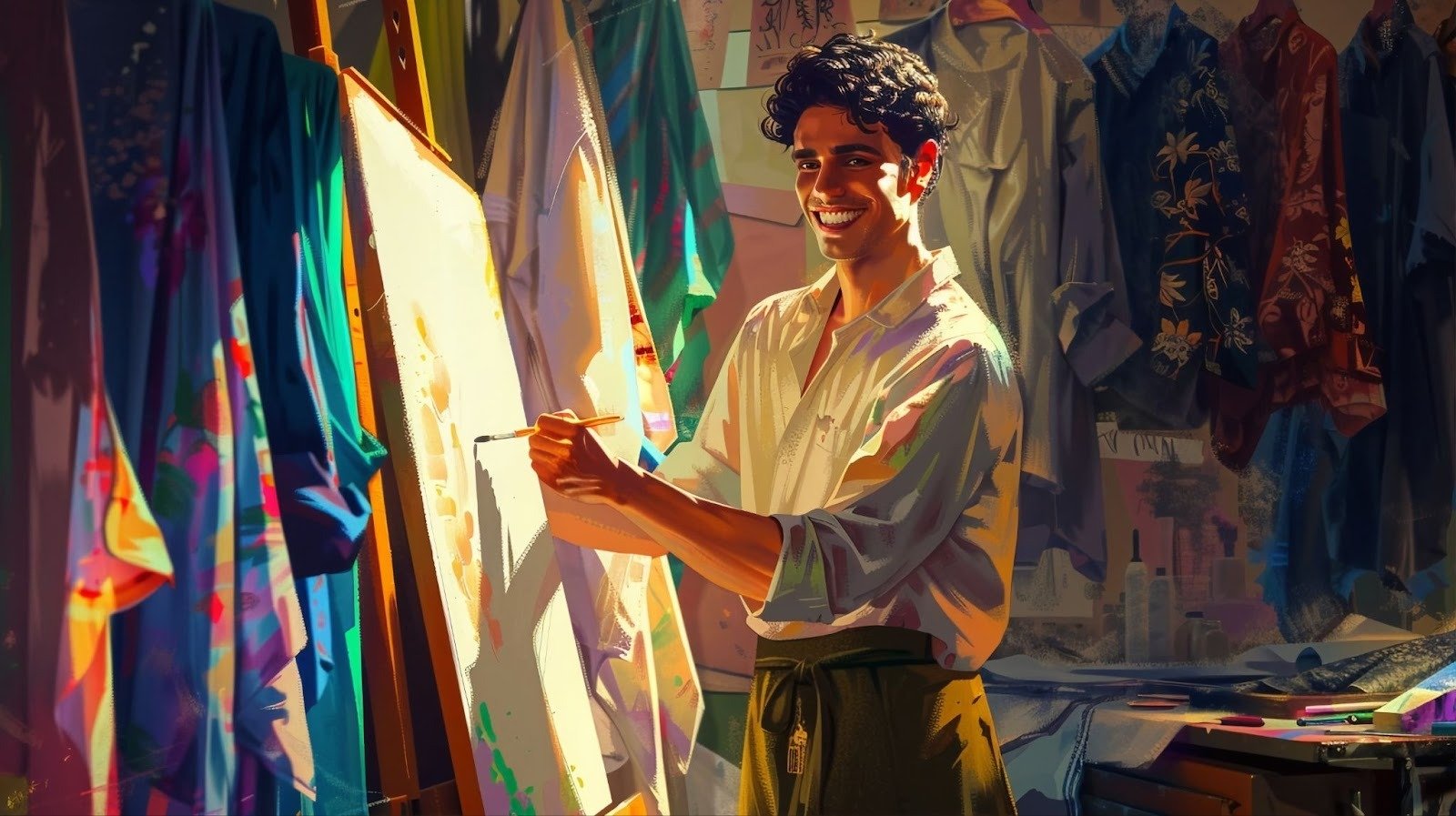
The last few years have changed how visual content is made. What once required a designer, a creative brief, multiple revisions, and a healthy budget can now begin with a simple prompt typed into a chat window. Tools built around midjourney ai art and similar systems have opened the door for marketers, solo creators, and small teams to generate visuals in minutes rather than days. But speed alone is not the full story.
The real shift lies in control. Marketers are no longer limited by stock libraries or their in-house design capacity. Creators are not blocked by software skills they have not mastered. AI art generators have changed who gets to create, how fast ideas can be tested, and how quickly content can move from concept to campaign.
Yet this new power brings new friction. Generating images is easy. Turning those images into effective marketing assets and videos that drive results is not. That is where the deeper conversation begins.
The Real Problem: Visual Bottlenecks in Modern Marketing
Today’s marketing environment moves faster than most creative workflows can handle. Social platforms demand constant posting. Product launches need visual teasers, explainer videos, thumbnails, ads, and landing page graphics. Creators are expected to publish consistently across formats.
The bottleneck is rarely ideas. It is execution.
Traditional workflows require designers, editors, feedback cycles, and rendering time. Even when teams are skilled, the process slows down experimentation. If a campaign needs five visual concepts, many teams settle for two. If a thumbnail does not perform well, it might not be replaced quickly enough to recover engagement.
Cost is another pressure point. Hiring freelancers or agencies for frequent visual updates becomes expensive. Smaller businesses often compromise on quality simply because they cannot justify ongoing design budgets.
AI art generators emerged to remove this friction. But simply producing images does not solve the full workflow problem marketers face.
Why Traditional Creative Methods Fall Short
Before AI, there were three main paths for creating visuals: hiring professionals, using stock images, or learning complex design software.
Hiring professionals delivers quality but adds cost and time. Each iteration requires communication. Each revision takes scheduling. In fast-moving digital campaigns, this delay affects momentum.
Stock libraries solve speed but not originality. When multiple brands pull from the same visual pool, differentiation disappears. Audiences quickly recognize generic imagery.
Learning professional tools such as advanced editing suites gives creators control but demands a steep learning curve. Many marketers are not designers. Spending hours adjusting layers or effects pulls them away from strategy and messaging.
This is where midjourney ai art reshaped expectations. By translating text prompts into high-quality visuals, it removed technical skill as a barrier. However, image generation alone does not complete the creative journey.
Marketers do not just need images. They need stories, motion, and distribution-ready content.
How AI Is Changing Comprehension and Creative Confidence
AI tools do more than automate design tasks. They shift how creators think.
When a marketer types a prompt and instantly sees multiple visual interpretations, it strengthens creative intuition. Instead of imagining how an idea might look, they can see it. This short feedback loop increases confidence and encourages experimentation.
Psychologically, this reduces fear of failure. If generating five variations takes seconds, creators are more willing to test bold ideas. This leads to better outcomes because performance-driven marketing depends on iteration.
AI also lowers cognitive overload. Rather than juggling software panels and technical settings, creators focus on describing intent. The interface becomes conversational instead of mechanical.
This is especially powerful when image tools connect with ai video apps. Static art becomes animated storytelling. What once required separate specialists can now happen within one fluid workflow.
Where AI Fundamentally Improves Video Creation
Video has become the most influential format across platforms. But video production traditionally demands scripting, filming, editing, sound design, and exporting in multiple formats.
AI changes this equation in three core ways:
- It reduces production time from days to minutes.
- It connects text prompts directly to visuals and motion.
- It allows rapid testing of variations without restarting from scratch.
When a creator generates midjourney ai art, they can now move beyond still images. With the right tools, those visuals become part of dynamic videos. Background scenes, animated transitions, explainer clips, and promotional ads can all start from AI-generated art.
This shift matters because video increases retention. Motion captures attention in crowded feeds. Brands that once avoided video due to complexity can now participate fully.
But again, image generation alone is not enough. The missing link is integration.
The Exact Problem This Solution Addresses
The gap most creators experience is not generating art. It is transforming that art into complete marketing assets.
A marketer may create beautiful visuals using midjourney ai art. But then they face new challenges:
- How do I turn this into a promotional video?
- How do I add text overlays and voice narration?
- How do I adapt this for different platforms?
- How do I create multiple versions for testing?
Switching between tools adds friction. Exporting, importing, resizing, and reformatting consume time. The efficiency gained from AI art can be lost in fragmented workflows.
This is where platforms like Invideo step in. On the Invideo Midjourney AI, the workflow is structured around turning AI-generated visuals into ready-to-publish videos without technical hurdles.
Instead of juggling multiple apps, creators move from concept to video inside one ecosystem. The image becomes part of a larger storytelling structure rather than remaining a static asset.
How Creators Realistically Use This in Their Workflow
Consider a small e-commerce brand launching a new product. The marketing manager wants to test three visual themes: futuristic, minimalist, and bold neon.
Using midjourney ai art, they generate multiple image styles for each theme. Within minutes, they have strong visual directions.
Now comes the crucial step. Instead of exporting those images and opening a separate editing suite, they move into Invideo. The images are placed into pre-built video templates designed for ads or product showcases. Text is added to highlight benefits. Transitions are adjusted. Music or voiceover is layered in.
In under an hour, the team has three distinct video ads ready for testing.
The same process works for content creators. A YouTube educator might generate background art for a concept explanation. Instead of manually editing each frame, they can integrate visuals into a structured video format, speeding up production without lowering quality.
The strength of this workflow is continuity. Image generation and video creation are no longer isolated tasks. They are connected stages of one process.
Use Cases Explained in Context
The power of combining midjourney ai art with video platforms becomes clear when applied to real scenarios.
A digital course creator designing learning modules can generate thematic visuals for each lesson. Rather than presenting static slides, they can convert those visuals into animated lesson intros that increase engagement.
A startup pitching investors can create stylized concept art to illustrate future product visions. Those visuals can then be transformed into pitch videos that feel polished and forward-looking.
Social media managers working with limited budgets can rapidly create weekly content themes. AI-generated art sets the tone, and video tools turn that tone into scroll-stopping clips optimized for short-form platforms.
Even agencies benefit. Instead of waiting on design teams for initial mockups, strategists can prototype campaigns quickly. Clients see ideas in motion rather than abstract descriptions.
The common thread is acceleration without sacrificing originality.
Implications for the Future of Creative Work
The rise of midjourney ai art and platforms like Invideo signals a deeper transformation.
Creative skills are shifting from execution-heavy to direction-heavy. The ability to write effective prompts, guide visual tone, and structure compelling narratives becomes more valuable than manual design precision.
This does not eliminate designers. Instead, it elevates their role. Professionals now focus on refining strategy and high-level aesthetics while AI handles repetition and speed.
For marketers and creators, adaptability becomes essential. Those who learn how to combine AI art with ai video apps will produce more content with fewer resources. Those who ignore these tools may struggle to keep pace with competitors who iterate faster.
There is also a learning shift. AI tools reduce entry barriers, meaning more people can participate in content creation. This democratization increases competition but also expands creative diversity.
The key is not replacing human creativity. It is amplifying it.
A New Creative Standard
The conversation around AI often centers on automation. But the deeper story is empowerment.
Midjourney ai art allows creators to visualize ideas instantly. Platforms like Invideo transform those visuals into polished videos ready for real audiences. Together, they remove friction from concept to execution.
For marketers, this means faster campaigns, more testing, and improved performance insights. For creators, it means freedom from technical barriers and more focus on storytelling.
The creative industry is not slowing down. Content demands will only increase. Those who build workflows that connect AI art with streamlined video production will define the next wave of digital storytelling.
In the end, the advantage does not come from simply using AI. It comes from integrating it intelligently into the way you work.